
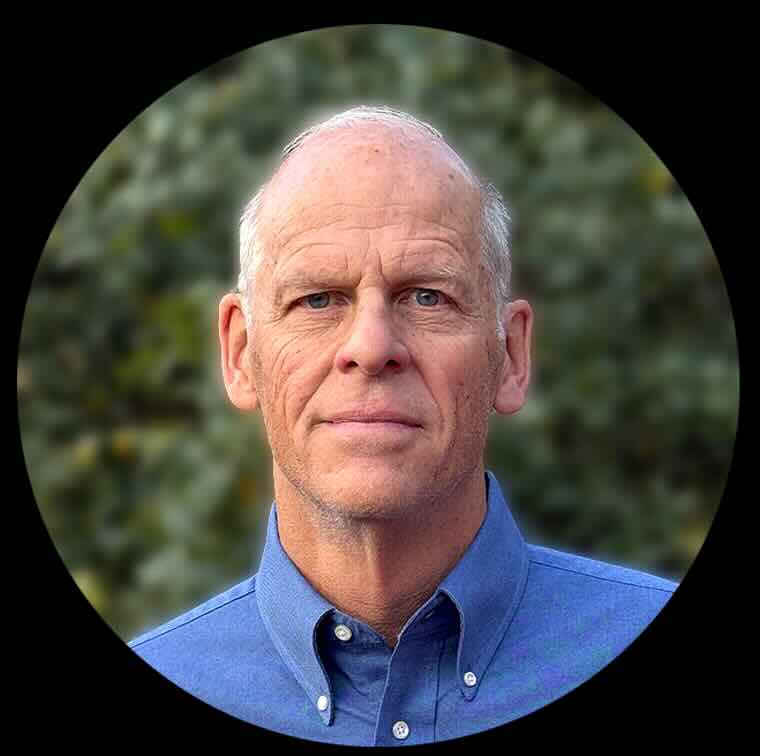
I began my career in manufacturing operations, ultimately serving as plant manager for a solid-propellant rocket factory. It was a never-ending battle to keep the operation running smoothly. That experience in a high-risk, government contracting environment showed me the importance of balancing risk, reliability, lead time, and cost attributes.
As a result, I moved upstream to lead engineering where the leverage to influence outcomes is greater. Shortly thereafter, I was asked to also take ownership of operations as well. In this capacity, it became very evident how interconnected those disciplines are.
I then joined Cisco at the beginning of its stratospheric rise to be the most valuable company in the world. The product portfolio was diverse, the appetite was insatiable, and the suppliers and materials could not keep up with demand. As a result, we pioneered the offshoring to China, and I led the largest contract manufacturer relationship with Foxconn. It became apparent to me how fragmented our supply chain had become with each product and business unit having its own supply chains. This limited leverage and drove complexity.
To address this, I established a supply chain architecture team to rationalize the supply chain architecture using analytics developed in partnership with Stanford and MIT. This experience showed me the value of data-driven decisions formed by business principles such as properly aligning cost, velocity, reliability to the product and customer requirements. Moreover, for the first time I realized how important it is to manage supply chain risk and that nobody does that well.
This led to being Amazon’s first Supply Chain Strategist. In this capacity, my mandate was to integrate supply chain thinking across product groups and business units to unlock capabilities that were strong but siloed. We developed a data-driven approach to supply chain strategy which proved very effective in aligning senior leaders behind major supply chain decisions.
During this time, I hired Jon and he replaced me when I took a similar role at Meta.
We have built a solution around our learnings to turn any company’s supply chain from a liability into a competitive advantage. Our methodology has shown to be successful at transforming an integrated supply chain to be a sustainable competitive advantage.
At a high level, the first step is optimizing across the entire supply chain and across the portfolio. Then, we evaluate a wide spectrum of scenarios and balance the supply chain across all of the critical attributes. Finally, we take companies through the process of leadership alignment and governance.
How does all of this work. The platform applies this methodology across your full portfolio as well as individual products. It evaluates multiple attributes—not just variable cost or lead time, but also capability, total cost, end-to-end lead times from ideation through delivery and service, sustainability, and risk. We’ve learned that whatever you optimize for will improve, but often at the expense of something else; the platform is designed to make those trade-offs explicit and manageable.
What truly differentiates the platform is how it compresses decision cycle time. At Amazon and Meta, gathering data, running scenarios, and performing analysis often took days or weeks. By the time we convened cross-functional executives and drove alignment, the situation had shifted and we were effectively starting over.
This platform enables near real-time executive alignment around scenarios. Moreover, it allows you to look further into the future, define a path to durable competitive advantage, and manage both risk and investment across each step on that path—without the perpetual rework that used to slow us down. It converges tactical with strategic.
Our demo will blow you away. In just a few minutes see how we perform our magic